
PPL » Aircraft Tech Knowledge (H) » Autorotation
14.68 Autorotation
14.68.2 Define autorotation.
Autorotation
- A condition where the rotor is driven by airflow from below rather than engine power
- Air flows up through the rotor disc, keeping it turning
Summary:
Autorotation is when the rotor is powered by upward airflow, not the engine.
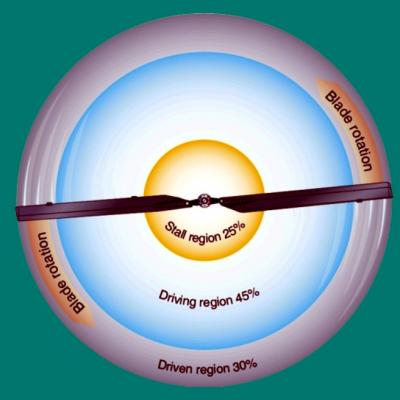
14.68.4 Identify the stalled, driving and driven regions (sections) of the rotor disc in autorotation.
Rotor Disc Regions in Autorotation
- Stalled Region (Inner section):
- Near the rotor hub
- Blade angle of attack too high → stalled
- Produces drag, little or no useful lift
- Driving Region (Middle section):
- Central part of the blade
- Airflow produces a forward (driving) force
- Maintains rotor RPM
- Driven Region (Outer section):
- Near the blade tips
- Produces lift but also drag
- Requires energy → tends to slow the rotor
Summary:
- Inner: stalled
- Middle: driving (powers the rotor)
- Outer: driven (uses power)
14.68.6 Explain the need to lower the collective at the start of an autorotation.
Need to Lower Collective at the Start of Autorotation
- Loss of engine power causes rotor RPM to decay rapidly
- High collective = high blade angle of attack and drag
- Lowering collective:
- Reduces blade angle of attack
- Reduces drag on the rotor
- Allows upward airflow through the disc
- Establishes the driving region
To see more, you must subscribe for licence "PPL" or sesssion "Aircraft Tech Knowledge (H)"