
PPL » Navigation » Form of the Earth
6.2 Form of the Earth
6.2.2 Describe the general shape of the earth.
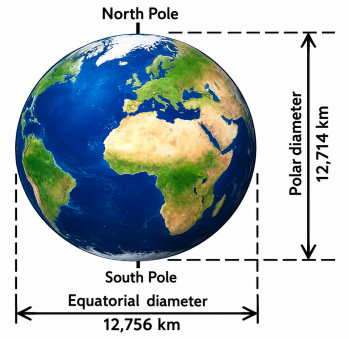
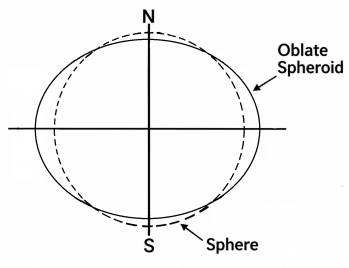
The Earth is not a perfect sphere. It is slightly flattened at the poles and slightly wider at the Equator, giving it a spheroidal shape.
- This shape is known as an oblate spheroid.
- The difference between the polar and equatorial dimensions is very small.
- For most practical navigation purposes, the Earth is therefore treated as a perfect sphere.
6.2.4 Define and identify, on a diagram of the earth:
(a) Axis and Direction of Rotation;
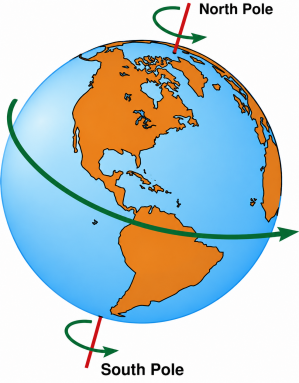
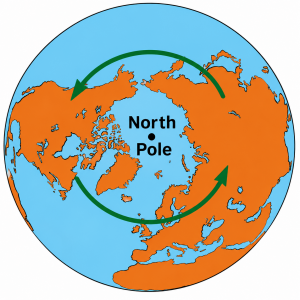
The Earth rotates about an imaginary axis that passes through the North and South Geographic Poles. These are fixed points at each end of the Earth’s axis and are also referred to as True North and True South.
- When viewed from the side along the equatorial plane, the Earth rotates from west to east.
- When viewed from above the North Pole, the Earth rotates in an anticlockwise direction.
(b) Geographic and Magnetic Poles;
The Geographic Poles and Magnetic Poles are not located in the same positions. The Geographic Poles are fixed by the Earth’s axis of rotation, while the Magnetic Poles are determined by the Earth’s magnetic field and can move over time.
To see more, you must subscribe for licence "PPL" or sesssion "Navigation"