
PPL » Aircraft Tech Knowledge (H) » Engine Instruments
14.34 Engine Instruments
14.34.2 Describe the function and principle of operation of the following instruments:
(a) tachometers (rpm) gauges (centrifugal and drag cup);
Tachometers indicate engine speed in revolutions per minute (RPM), allowing the pilot to monitor and control engine performance.
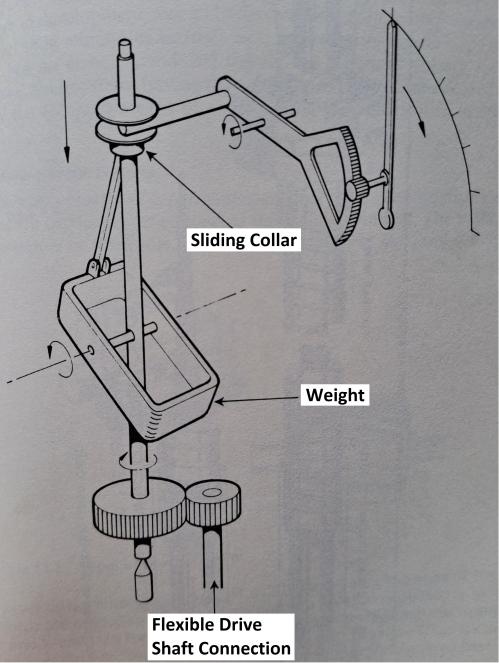
Centrifugal Tachometer (Mechanical)
Principle:
- Driven mechanically from the engine (usually via a cable)
- Uses centrifugal force acting on rotating weights
Operation:
- As engine RPM increases, rotating flyweights move outward due to centrifugal force
- This movement is transmitted through a mechanism to move the pointer on the gauge
- Higher RPM → greater outward movement → higher indication
Click here: Centrifugal Tacho
Drag Cup Tachometer (Eddy Current Type)
Principle:
- Based on electromagnetic induction (eddy currents)
Operation:
- A permanent magnet rotates with the engine
- Surrounding it is a non-magnetic aluminium cup (drag cup) attached to the pointer
- Rotation of the magnet induces eddy currents in the cup
- These currents create a magnetic field that drags the cup around
- The faster the rotation, the greater the drag → greater pointer deflection
To see more, you must subscribe for licence "PPL" or sesssion "Aircraft Tech Knowledge (H)"